What Is a Parent’s Tea Ritual and How It Fits into Modern Weddings | Vancity Officiant Wedding Guide

Updated: May 3

In many modern weddings, couples are not always looking for a full traditional tea ceremony, but that does not mean they want to leave out the moment of acknowledgment between themselves and their parents. This is where a parent’s tea ritual comes in.
What Is a Parent’s Tea Ritual
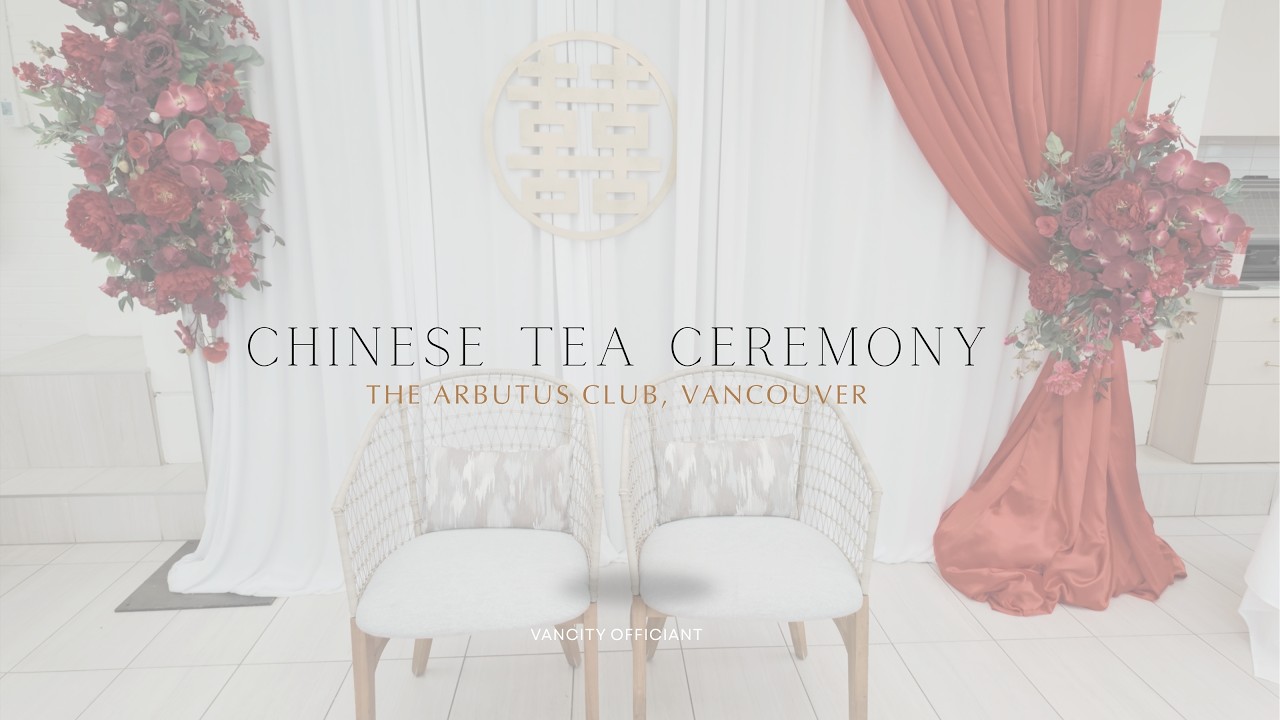
A parent’s tea ritual is a simplified form of a Chinese tea ceremony that focuses specifically on both sets of parents. Rather than including a larger extended family or following a longer traditional structure, the moment is centered on the relationship between the couple and their parents, and it is often held within the main wedding ceremony so that all guests can witness the exchange.
Why Many Couples Choose This Approach
For many couples today, especially in smaller or multicultural weddings, a full tea ceremony may feel difficult to fit into the day. There may be time constraints, venue limitations, or simply a desire to keep the ceremony more focused, but at the same time, the acknowledgment of parents remains deeply important. A parent’s tea ritual offers a way to hold that acknowledgment without needing to separate it into a different location or timeline.
Not About Simplifying, but Focusing

This approach is not about removing meaning, but about bringing attention to what matters most within the tea ceremony. By focusing on the parents, the moment becomes more contained and often more felt, allowing guests to follow what is happening more easily so that the exchange becomes something shared rather than something happening on the side.
If you would like to understand how tea ceremonies can be adapted more broadly, you may also want to read how a Chinese tea ceremony can be simplified for modern weddings.
How It Fits into a Wedding Ceremony

A parent’s tea ritual is often integrated into the main wedding ceremony rather than held separately. While it can be placed at different points, we often suggest holding it just before the declaration, as a moment of acknowledgment before the transition into marriage.
It allows the ceremony to move from gratitude into commitment in a way that feels natural, so the experience remains continuous, rather than broken into separate parts.
If you are exploring this further, you may also find it helpful to read what a tea ceremony means from an officiant’s perspective.
A Moment That Can Be Seen and Felt

A parent’s tea ritual does not rely on length or complexity to feel meaningful, but on whether the acknowledgment between the couple and their parents is clearly expressed and understood.
When the moment is held in a way that allows everyone present to follow, it becomes something that is not only performed, but shared.