A Bride Walked Down the Aisle Alone. Her Parents Had Questions.


A reflection on wedding traditions, family expectations, and the intentions behind our choices.
At a wedding rehearsal in Vancouver, I was reviewing the processional with the couple and their wedding planner.
The arrangement was straightforward. The bride's parents would walk down the aisle together, followed by the bride, who would enter on her own.
No complicated choreography. No unusual timing. Everyone knew where they were supposed to go.
Or so I thought.
A Question After the Rehearsal
The wedding planner wondered whether the bride had chosen to enter alone for the photographs. It was a reasonable thought. The way people enter a ceremony can certainly affect how those moments are photographed.
From my perspective as the officiant, the arrangement was clear. The bride had made her decision, and there was no practical reason to question it.
We went ahead with the rehearsal.
Afterwards, her parents came over to speak with me.
They were curious about one particular detail: why was their daughter walking down the aisle alone?
They were familiar with the tradition of a father escorting his daughter. This arrangement was different from what they had expected.
I explained that there are several ways to organize a wedding processional. Some brides walk with both parents, some with one, and others enter alone.
But that didn't tell us why their daughter had chosen this arrangement.
And I wasn't going to invent an explanation on her behalf.
I suggested we ask her together. If she wanted to change anything, we still had time.
Her answer was much simpler than any of us had anticipated.
She didn't want her mother to walk down the aisle alone.
Instead, she wanted her father to accompany her mother. She was perfectly happy making her own entrance.
That was it.
Her parents hadn't realized that the arrangement was, in part, for them.
Once they understood, they were touched by her thoughtfulness. They supported her decision, and we didn't need to change a thing.
Sometimes the Arrangement Isn't the Problem
What stayed with me wasn't simply that the bride had chosen to walk alone. It was how easily we could have misunderstood her reasons.
The planner had considered the photographs. Her parents had been thinking about a familiar tradition. Neither interpretation was unreasonable, but neither was what the bride had in mind.
When her parents approached me, I could have explained the different ways couples organize a processional and left it there. But that would only have answered whether the arrangement was acceptable. It wouldn't have answered what they actually wanted to know: why had their daughter chosen it?
So we asked her.
That distinction has become useful in my work. Sometimes the practical arrangement is perfectly fine. The question is whether the people involved understand what it means to one another.
Of course, a conversation doesn't guarantee agreement. Parents may understand a decision and still wish things were different. A couple may appreciate a tradition and still choose not to follow it.
I wouldn't call that a failed conversation. At least people have had a chance to explain what matters to them instead of leaving everyone else to guess.
In this case, the explanation was enough. Nothing needed to change.
How Long Should a Wedding Processional Be?
I encounter related questions when couples decide who should walk down the aisle.
It can start with a simple plan involving the couple and their parents. Then someone asks about the grandparents. And the aunts and uncles? What about relatives who helped raise them?
Before long, a processional that originally involved a handful of people has become a much longer list.
There is nothing wrong with that. Some couples genuinely want to recognize their extended family during the ceremony, and having those people participate can be meaningful.
But sometimes, as we review the arrangements, I hear a slightly different concern: if we include one person, will someone else feel left out?
That's when I find it useful to ask what the couple wants the entrance to accomplish. Is including these relatives part of the moment they imagined, or are they mainly worried about disappointing someone? Sometimes the answer is both.
I'm not trying to persuade anyone to shorten their processional. A long family entrance can be lovely, and a short one can be just as appropriate. I simply want to understand how the list came together before we finalize who walks when.
A Similar Question at Chinese Tea Ceremonies
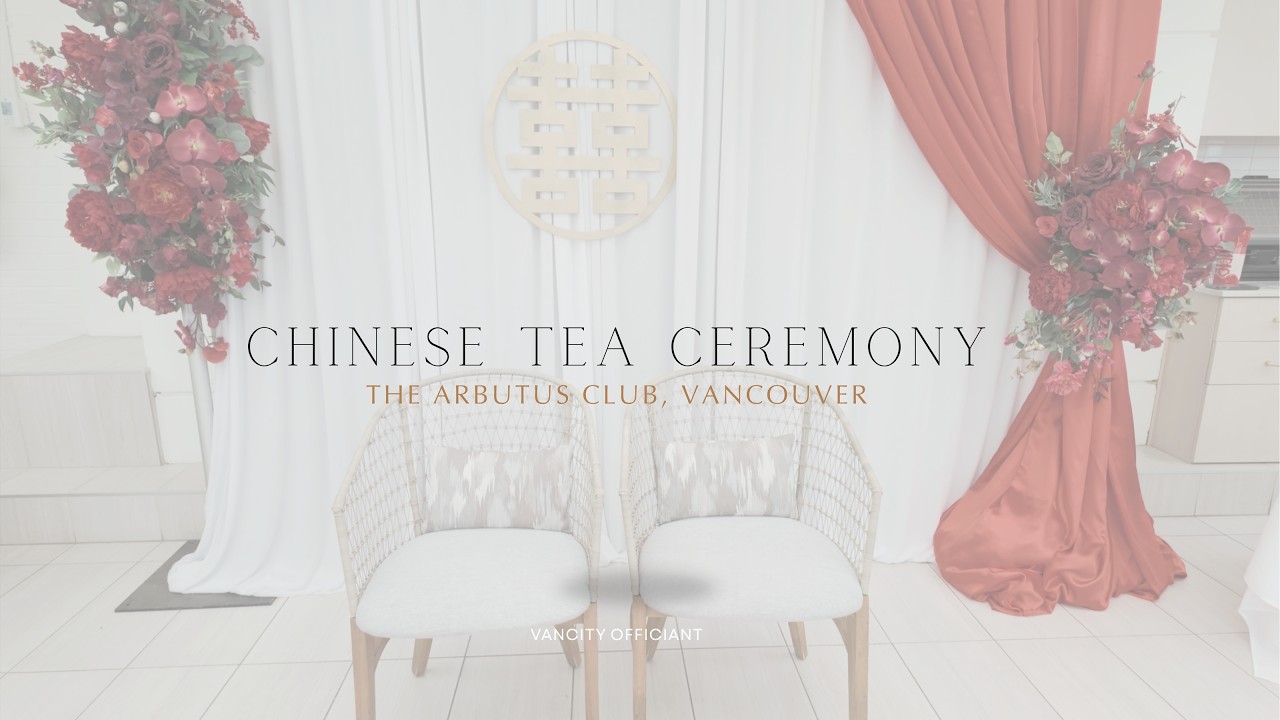
I run into a related situation when helping couples prepare a Chinese tea ceremony. One of the details we review is the tea-serving order: who receives tea first, and who follows.

On paper, it looks like a list of names. In practice, family seniority and customs can make that list a little more interesting.
Traditions vary between families, so I don't assume every household follows exactly the same order.
When I notice a proposed sequence that might raise questions, I don't immediately tell the couple it's wrong. I ask whether they've discussed it with their family.
They may already have. Their relatives may be perfectly comfortable with the arrangement. Or the couple may not know that a particular order matters to someone. Sometimes they've deliberately chosen to do things differently.
Those are three different situations, even though the list on my screen might look exactly the same.
That's why I prefer asking before suggesting changes. It doesn't mean every family member needs to approve every decision. A couple can understand a tradition, appreciate why it matters to their parents, and still choose another approach.
What I'd rather avoid is discovering an unexpected disagreement when everyone is already dressed for the ceremony and waiting for their tea.
What I've Come to Notice
Over time, I've become more interested in the conversations behind wedding arrangements than in whether those arrangements follow a particular tradition.
When reviewing a processional, I can check the order, the timing, and where everyone should stand. For a Chinese tea ceremony, I can help organize the serving sequence and explain customs that may be relevant.
Those are practical parts of my work.
But a perfectly organized ceremony doesn't necessarily mean everyone understands why certain decisions were made.
I've noticed that questions about wedding traditions are sometimes less about the traditions themselves and more about what people believe those traditions represent.
A parent might see walking a daughter down the aisle as an important family moment. A bride might see entering alone as a way to give her parents a moment together. Both may care deeply about the same relationship, even though they imagine the ceremony differently.
That's why I find it useful to ask questions before offering solutions.
Not every difference needs to be resolved through compromise. Sometimes a couple changes their plans after hearing another perspective. Sometimes they don't. And sometimes, as in this wedding, the arrangement was already exactly what the couple wanted.
The only thing missing was an explanation.
On the wedding day, her father walked beside her mother. A little later, the bride made her entrance alone.
To someone watching, it was simply a wedding processional.
Her parents knew why their daughter had made that choice.
About Kit Chan
Kit Chan is the co-founder of Vancity Officiant and The Ensora in Metro Vancouver. She has experience across wedding photography, planning, officiating, and developing wedding-related businesses. Through Wedding Perspectives, she explores the ideas, traditions, and changing expectations surrounding weddings.