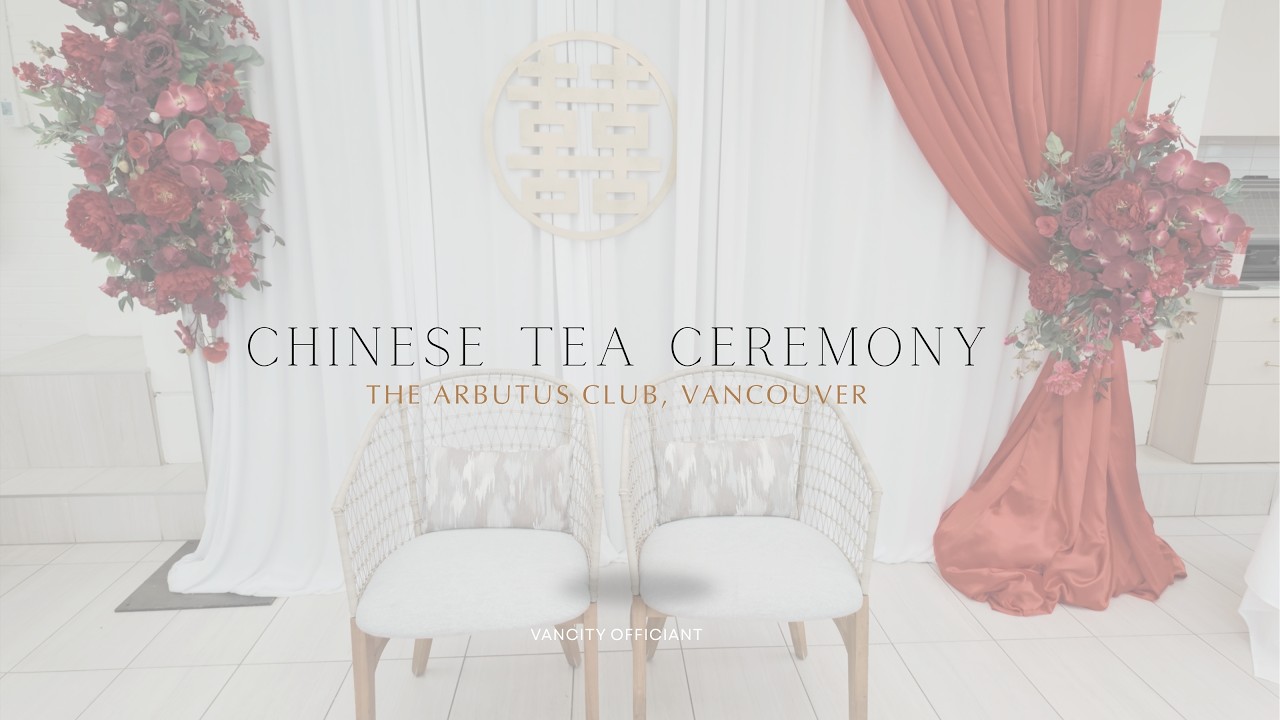
A Multicultural Chinese Tea Ceremony at The Arbutus Club Vancouver | A Vancity Officiant Ceremony Story


At a recent wedding at The Arbutus Club in Vancouver, Kevin was leading the couple’s Chinese tea ceremony while I was working from the tea station, preparing and serving the tea as each family member took their turn.
I was also filming parts of the ceremony that day, which gave me a slightly different view of what was happening in the room. I wasn’t standing at the front leading the ceremony. I was watching it unfold from the side.

And what stayed with me most was the groom’s family.
Before the couple completed their legal signing, both sides of the family came together for the tea ceremony. The groom’s family is Caucasian and was not familiar with many of the customs involved. But from where I was standing, what stood out was never how much they already knew.
It was how wholeheartedly they wanted to understand.
They listened carefully as the meaning behind the ceremony was introduced. They paid attention to the small details, followed the moments as they unfolded, and most importantly, offered their blessings with sincerity.
Watching that from the tea station was one of the moments that stayed with me after the wedding.
A tradition does not have to belong to everyone in the room for everyone in the room to feel what it means.
More Than Getting the Steps Right
We have led Chinese tea ceremonies for families who know the traditions by heart, and for families experiencing them for the very first time.
Watching this ceremony unfold reinforced something I have come to value more and more in ceremony work: sometimes our job is not to give people more instructions. It is to give them enough reassurance that they can stop thinking about the instructions.
It is easy to think that good guidance means making sure nobody misses a step: who sits first, who serves whom, how the tea is offered, when a blessing is given, when gifts or red envelopes are exchanged, and who comes next.
Of course, the flow still matters. Someone needs to know what comes next.
But we no longer believe that the most important measure of a ceremony is whether everyone performs every step perfectly.
In fact, the more unfamiliar a tradition is, the easier it is for someone to spend the entire ceremony worrying:
Am I doing this correctly?
What am I supposed to do next?
Where should I stand?
When do I speak?
When people are busy trying not to make a mistake, it becomes much harder for them to experience the moment itself.
That is also how we have come to approach ceremonies at Vancity Officiant: less about asking families to remember a sequence of instructions, and more about creating enough comfort that they do not have to.
The flow is ours to look after. The moment belongs to the family.
Creating a Feeling, Not a Performance
Traditionally, Chinese weddings have often placed a strong emphasis on celebration, auspiciousness, energy and joy. The role of a dai kum jie (大妗姐), for example, has historically included guiding families through customs and steps while bringing lively, celebratory energy, humour and auspicious words into the occasion.
That experience can still be exactly what some families want.
Our celebrant-led approach has a different emphasis.
Rather than making the tea ceremony feel like a sequence of customs everyone needs to perform correctly, we want to give people enough context to understand what is happening, and enough support to stop thinking about what comes next.
Because the less they have to think about the ceremony, the more they can actually experience it.
For someone participating in a Chinese tea ceremony for the first time, that sense of reassurance matters. They do not need to suddenly become an expert in Chinese wedding traditions. They simply need to understand why this moment matters, and to know that someone is there to guide them naturally through it.
Then they can be present.
They can receive the tea. They can look at the couple in front of them. They can think about what they want to say. They can give a blessing because they mean it, rather than because the program says it is time to give one.
Standing at the side of the room that day, I could see what that kind of emotional space makes possible.
Watch the Tea Ceremony
I filmed parts of the ceremony while working at the tea station that day. The video below captures more of how this multicultural Chinese tea ceremony unfolded at The Arbutus Club.
YouTube video: https://www.youtube.com/watch?v=htMD_EO_KuU
Why Family Roots Still Matter
The Chinese tea ceremony carries many layers of tradition, but underneath them is something remarkably human: acknowledgement.
It creates a moment for a couple to pause and recognize the parents, grandparents and family members who came before them, supported them and helped bring them to this point.
Family roots hold a particularly important place in Chinese culture. But you do not have to share the same cultural background to understand gratitude, respect, belonging or the significance of welcoming another person into your family.
That was what felt so special to me about this wedding.
The groom’s family did not need a lifetime of familiarity with the tradition to participate meaningfully in it. Their willingness to listen, understand and offer their blessings wholeheartedly was enough to turn something culturally unfamiliar into something they could genuinely share.
And perhaps that is one of the most beautiful things about a multicultural wedding.
It is not simply two cultures appearing beside one another in the same room.
Sometimes, it is one family being invited into another family’s tradition, understanding why it matters, and making space for it to become part of their own shared story.
When the Tea Ceremony Is New to Part of the Family
If you are planning a Chinese tea ceremony and one side of the family is unfamiliar with the tradition, that does not have to make the ceremony awkward or overly complicated.
You do not need to turn the weeks before the wedding into tea ceremony training.
What matters more is creating a ceremony in which people understand enough to feel comfortable participating. Give them the meaning before the mechanics. Allow room for blessings to sound like the people giving them. Adapt language and flow where needed. And have someone present who understands the tradition well enough that the family does not have to worry about remembering every next step.
For some couples, adapting the tradition may mean focusing specifically on the parents through a Parents’ Tea Ritual.
A multicultural tea ceremony does not become meaningful because everyone performs it in exactly the same way.
It becomes meaningful when everyone understands why they are there.
From Tea to “I Do”
After the tea ceremony at The Arbutus Club, the focus gently shifted from the families back to the couple as we moved into their legal signing.
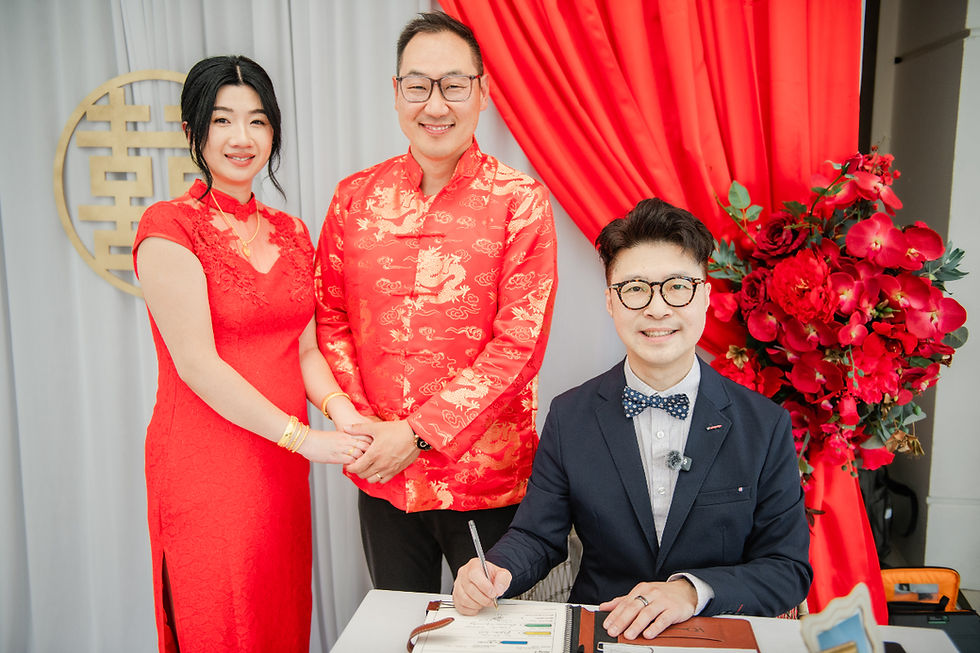
It was a simple transition, but a fitting one.
The first part of the gathering acknowledged the families and roots surrounding their relationship. The second formally recognized the commitment the couple had chosen to make to one another.
For me, that afternoon was memorable not because every person in the room arrived knowing the same traditions.
It was memorable because they did not need to.
Tradition gave the ceremony its roots. The people in the room gave it life.
Photo Credit
It was a pleasure collaborating once again with Bokeh Wedding Photography. Thank you for providing the beautiful photographs from this celebration.